

Born in Chicago, John H. Sibley has built an artistic life shaped by determination, formal study, military service, professional responsibility, and survival. His early interest in drawing grew after his father enrolled him in an Art Instruction Schools course, where winning an illustration contest confirmed his desire to become an artist. After graduating from Eisenhower High School, where he was later inducted into the Hall of Fame, Sibley attended the American Academy of Art in Chicago. He enlisted in the United States Air Force in 1968 during the Vietnam era and served for two years in Korea. Following his honorable discharge, he continued his education at Kennedy-King College and the School of the Art Institute of Chicago, becoming the first member of his family to earn a BFA in 1994. Now retired, Sibley remains committed to painting, writing, teaching, and advocating for homeless veterans.
Sibley’s artwork reveals an artist unwilling to be limited by a single subject, medium, or visual language. His practice moves between portraiture, animal studies, historical imagery, and abstraction. Across these different approaches, color and emotional presence remain central. Whether he is carefully describing the features of a familiar cultural figure or building an image from broad, instinctive marks, he gives each composition a distinct psychological atmosphere.
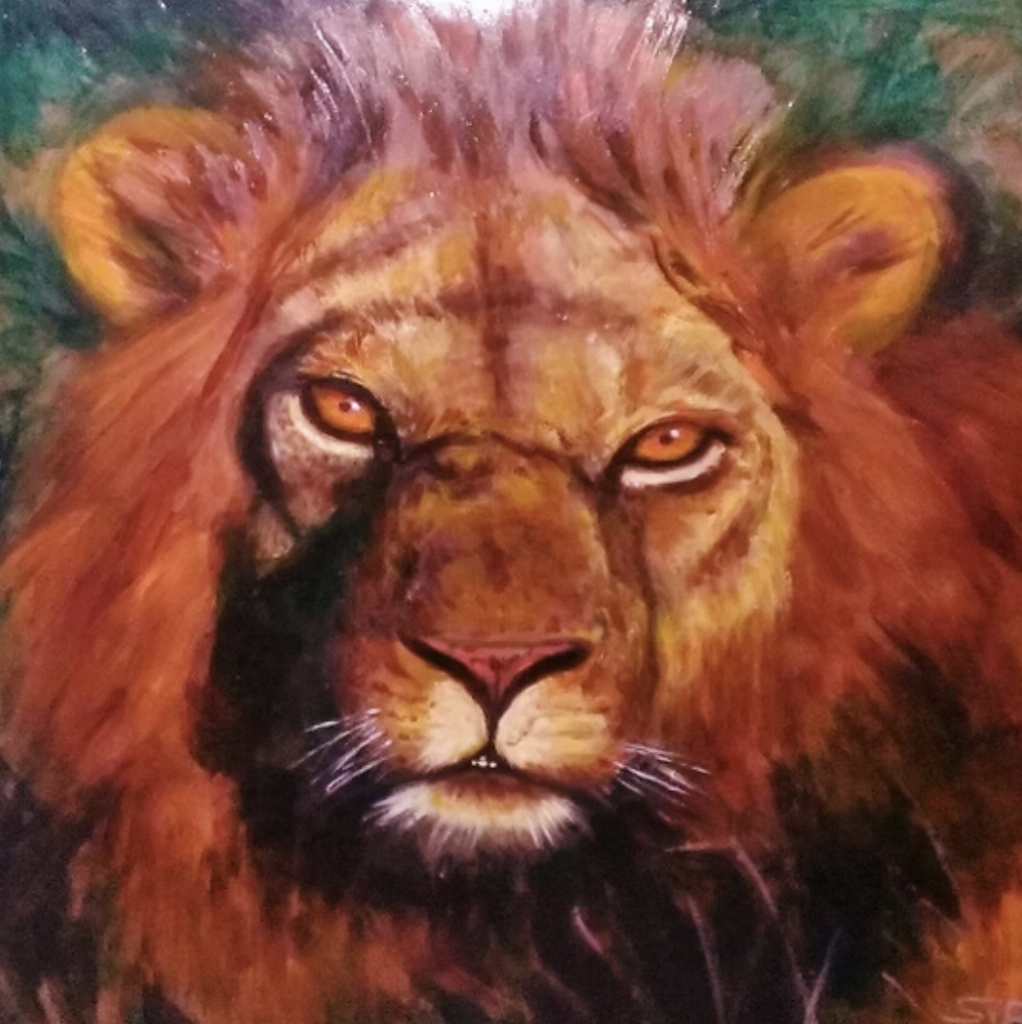
His portrait of a lion demonstrates his ability to communicate strength through direct observation. Filling nearly the entire composition, the animal looks outward with a steady, concentrated gaze. Its amber eyes immediately hold the viewer’s attention, while the surrounding mane unfolds through layers of rust, red, black, gold, and violet. Sibley does not treat the lion as a distant wildlife subject. By bringing its face close to the picture plane, he gives it the commanding presence of an individual portrait. The loose movement of the fur contrasts with the more defined eyes and muzzle, balancing physical energy with stillness and control.
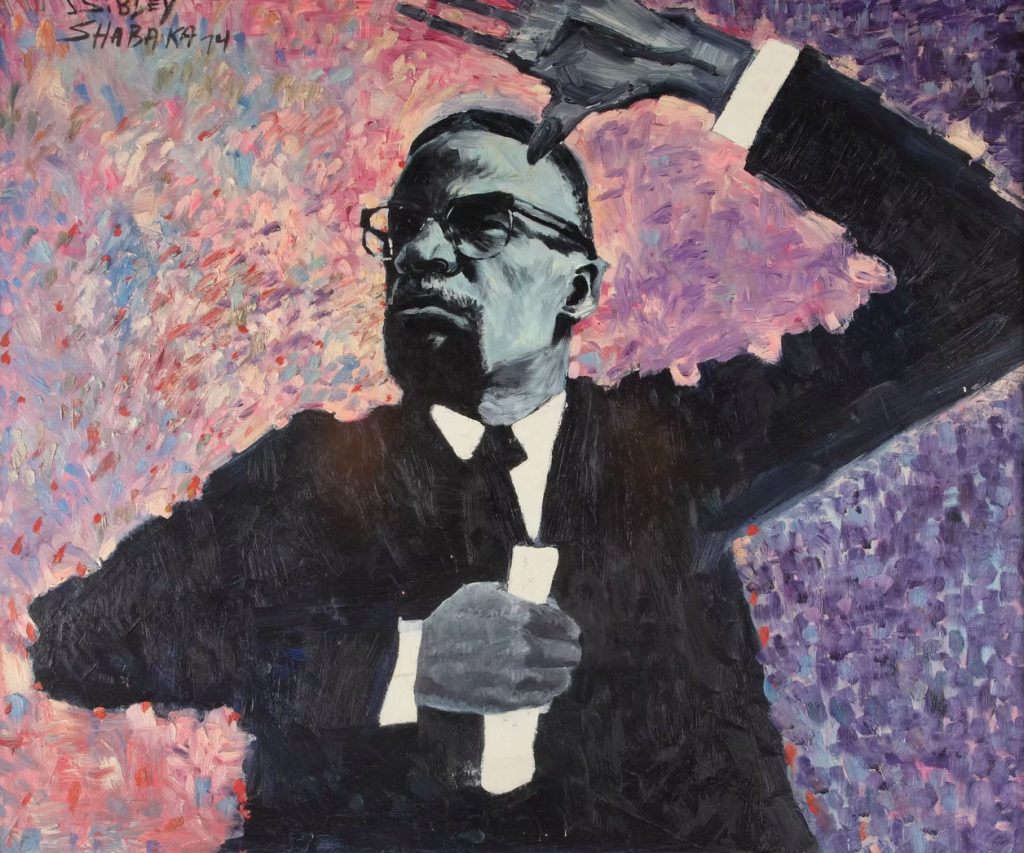
A different kind of intensity appears in Sibley’s portrayal of Malcolm X. The figure is shown in a formal suit and glasses, with one arm raised as a gloved hand holds a gun near his head. The gesture appears to reference the well-known 1964 photograph of Malcolm X guarding his family after receiving threats. Sibley places the sharply defined, largely monochromatic figure against an active field of pink, purple, blue, and red marks. This contrast separates the subject from ordinary space and creates an atmosphere of urgency, danger, and public pressure.
The portrait’s expressive background carries more than decorative color. Its repeated marks suggest noise, conflict, and constant movement surrounding a figure who remains composed despite the implied threat. Cool tones across the face establish a serious, almost sculptural presence, while the dark suit anchors the image. Instead of creating a neutral historical likeness, Sibley uses color and gesture to communicate the emotional weight of a moment shaped by resistance and vulnerability.
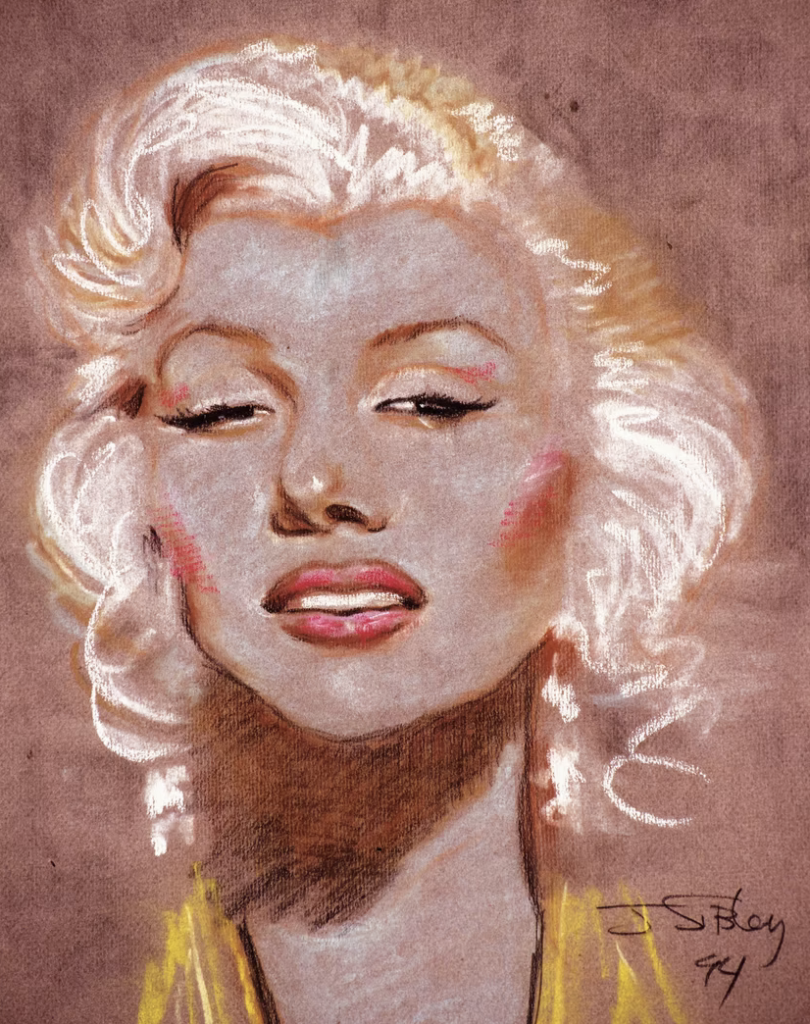
His portrait of Marilyn Monroe presents another widely recognized figure, but with a considerably softer mood. Rendered in warm brown, cream, pink, and golden tones, the image emphasizes luminosity and glamour. White highlights move through the hair, creating the impression that the figure is illuminated from within. Her lowered eyelids and slightly parted lips produce an expression suspended between performance and introspection. While the face recalls Hollywood beauty, its delicate handling also suggests the fragile person beneath the celebrated public image.
The portraits of Malcolm X and Monroe demonstrate Sibley’s interest in cultural memory. Both subjects possess instantly recognizable identities, yet he approaches them through contrasting emotional registers. Malcolm X appears alert and defensive within a turbulent field, while Monroe seems quiet and inward-looking. Through these differences, Sibley explores how public figures survive in collective memory as both individuals and symbols.
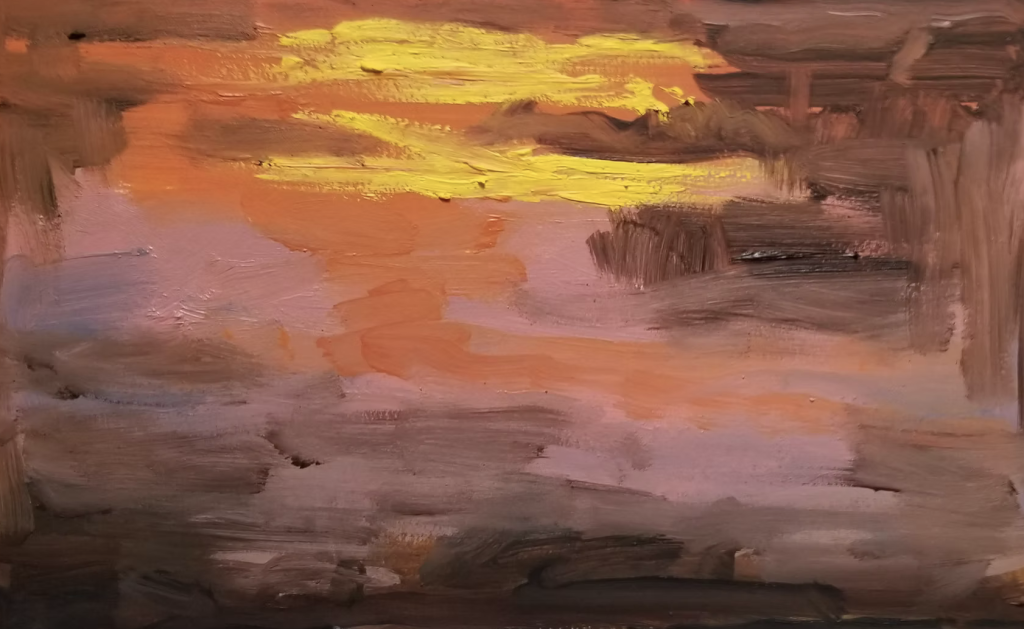
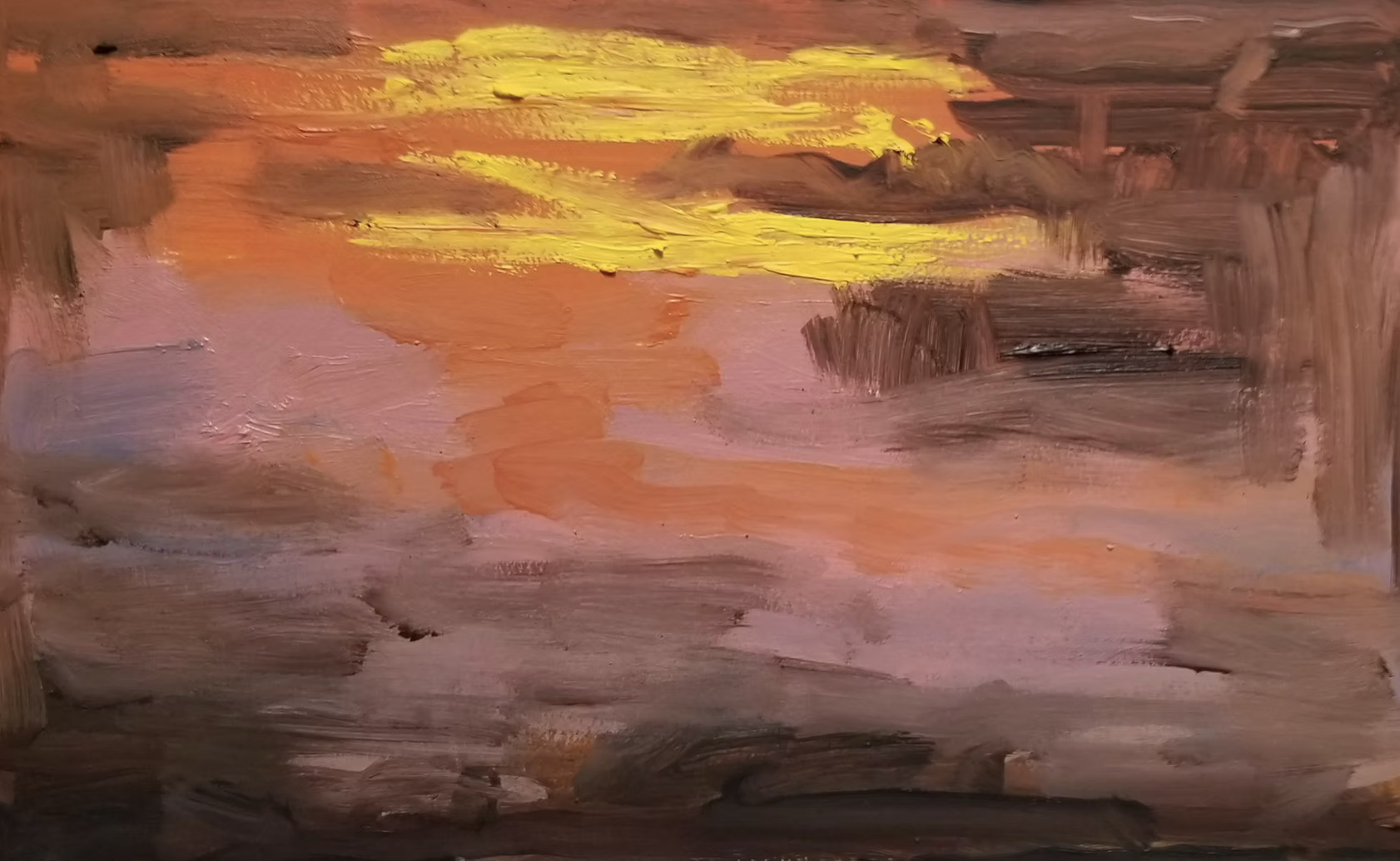
His abstract painting expands this interest in emotion without relying on a recognizable subject. Broad passages of muted rose, brown, orange, and gray establish a dense atmospheric ground. Bright yellow strokes interrupt the upper portion like sudden light crossing a troubled landscape. The marks retain the evidence of the brush, allowing viewers to sense the physical act of painting. Rather than explaining a particular place, the image remains open to personal association. It may suggest sunset, industrial space, weather, memory, or an internal emotional state.
This freedom reflects the persistence that has defined Sibley’s life. After experiencing what his biography describes as a wrongful arrest in the late 1970s, he endured instability and homelessness as a veteran and artist in Chicago. He later began work as a spot-welding intern at an acoustic company and eventually became a supervisor, remaining there for twenty-seven years while continuing to pursue art and literature.
Today, Sibley’s work carries the accumulated perspective of an artist who continued creating through hardship, employment, education, and family life. As a part-time guest art teacher and advocate for homeless veterans, he extends his experience beyond the studio. His paintings communicate strength, sensitivity, and curiosity while showing that an artistic life can develop across many roles. For Sibley, art is not separate from survival; it is a lasting means of reflection, dignity, and connection.
