

An International Journey Beyond Convention
Born in Santa Fe, Argentina, in 1972, Alejandro Caiazza is an international contemporary mixed-media artist whose work draws from Neo-Expressionism, Art Brut, and Outsider Art. Raised in Ciudad Guayana, Venezuela, he briefly studied architecture in Caracas before moving to France in 2000. In Paris, he attended L’École Supérieure des Beaux-Arts and met artist Ouànes Amor, who introduced him to Art Brut and the CoBrA movement. Caiazza eventually left formal education, choosing an independent, self-directed artistic path that allowed him to challenge established conventions.
Since his first solo exhibition at Sala de Arte de Sidor in Venezuela in 1999, Caiazza has exhibited in France, Italy, Japan, Venezuela, and the United States. Now based in the United States, he creates emotionally direct works examining identity, politics, sexuality, violence, displacement, madness, and everyday life. His work appears in international private and public collections.
“Doll in Blue”: The Fragility of the Inner Child
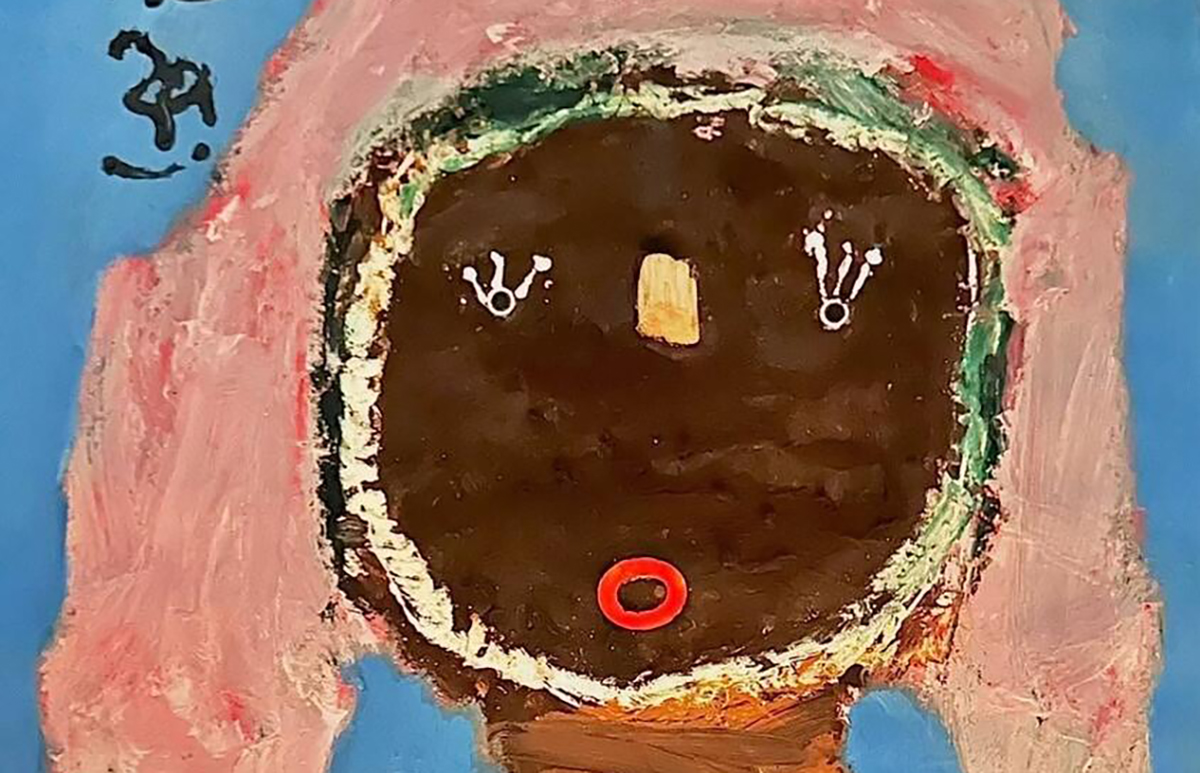
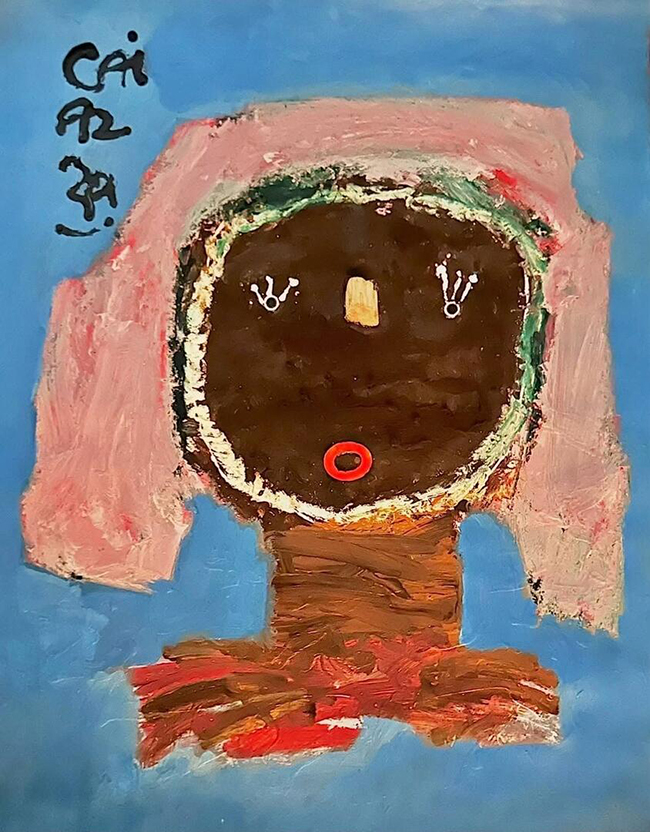
In Doll in Blue (2026), Alejandro Caiazza turns toward childhood as both a place of innocence and a source of emotional vulnerability. Created with acrylic and other materials on cardboard, the work is deliberately raw, tactile, and direct. Its apparent simplicity invites the viewer into an image that feels familiar, yet emotionally unsettled. Beneath the figure’s childlike appearance lies a deeper longing for affection, security, and a place that can truly be called home.
The doll becomes more than an object associated with childhood. It appears as a symbolic presence carrying the emotional memory of abandonment. Its gaze suggests quiet sadness, but it does not surrender entirely to despair. Instead, it retains a fragile sense of hope. Caiazza uses this tension to explore what happens when childhood innocence encounters a world that is often confusing, ambiguous, and painful.
The work’s physical surface plays an essential role in this emotional experience. Layers of paint, irregular marks, textures, and areas of relief give the image a sensual and almost bodily quality. The surface does not attempt to appear polished or controlled. It bears evidence of its creation, allowing each gesture and material choice to remain visible. Like memory itself, the composition feels layered, incomplete, and marked by experience.
Cardboard is particularly meaningful within the work. Unlike traditional canvas, cardboard is modest, vulnerable, and closely connected to ordinary life. It can be bent, damaged, discarded, or reused. In Caiazza’s hands, this everyday material becomes a surface for emotional reflection. Its imperfections strengthen the feeling that the doll exists in an uncertain environment, where comfort and stability cannot be taken for granted.
The blue surrounding and shaping the figure introduces another emotional layer. Blue can suggest tenderness, introspection, solitude, or melancholy. Here, it creates a psychological atmosphere in which the doll seems suspended between memory and the present. The color gives the work a dreamlike sensitivity while deepening its sense of isolation. The figure appears close enough to recognize, yet emotionally distant, as if emerging from a childhood memory that cannot be fully recovered.
Caiazza’s approach reflects the freedom and immediacy associated with Art Brut and Neo-Expressionism. Rather than pursuing technical perfection or conventional beauty, he allows emotion, instinct, and material to guide the composition. The work communicates through its directness. Its visual language may seem spontaneous, but its simplicity is carefully charged with psychological meaning.
At the center of Doll in Blue is a question about what remains of childhood after innocence has been challenged. Growing older requires an awareness of cruelty, contradiction, and loss. Yet Caiazza suggests that preserving the inner child is not a form of weakness. It is a way of protecting the capacity to imagine, trust, feel, and hope.
The doll’s gaze therefore becomes the emotional heart of the work. It asks viewers to recognize something of themselves within this vulnerable figure. Each person carries memories of wanting safety, love, and belonging. Even when these desires remain unfulfilled, they continue to shape adult identity.
Through humble materials and an unguarded visual vocabulary, Caiazza transforms a seemingly simple doll into a reflection on human resilience. Doll in Blue acknowledges that life can leave lasting wounds, but it also protects a small space for tenderness. Within its textured surface, innocence and experience coexist, reminding us that maintaining our humanity may depend upon preserving the vulnerable, hopeful child that still lives within us.
