

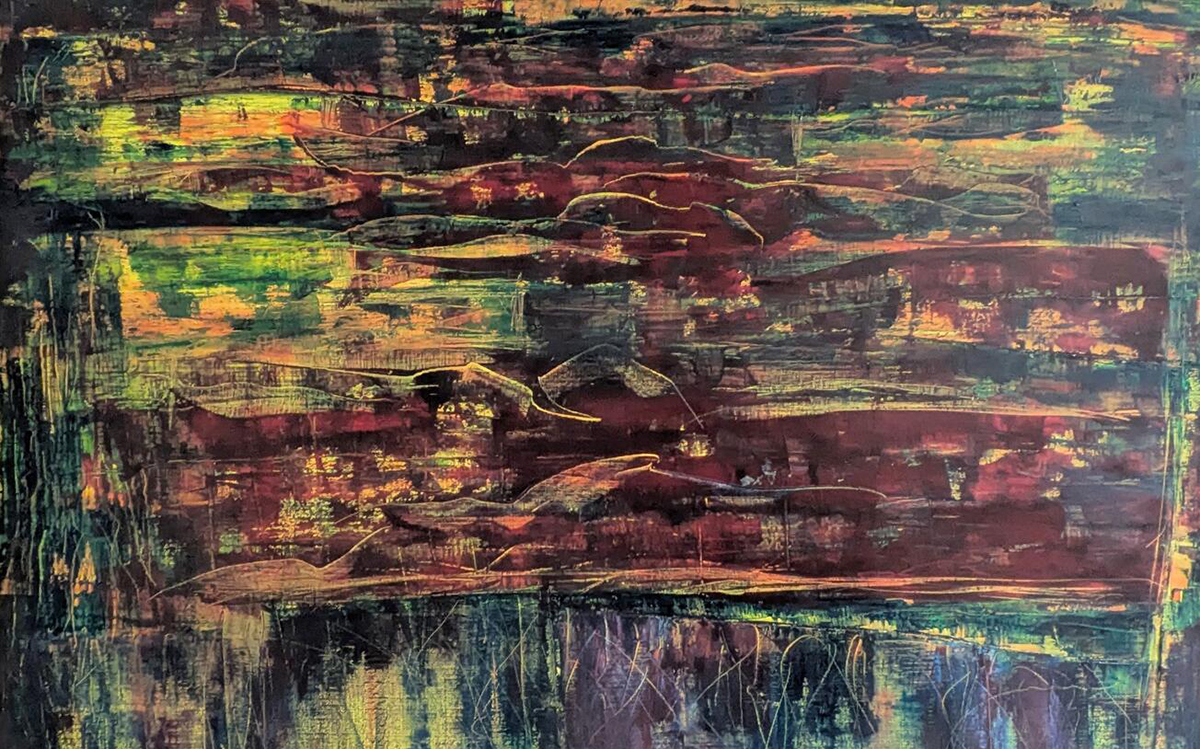
Based in Milan, German artist Cordula Heuer creates abstract oil paintings that explore the evolving relationship between structure and spontaneity. After working figuratively, Heuer turned toward abstraction as a more immediate means of examining perception, emotion, and the physical character of paint. Using brushes and palette knives, she develops richly layered surfaces where colors, gestures, and textures repeatedly conceal and expose one another. Her compositions resist conventional narratives and definitive interpretations. Instead, they invite viewers to look slowly and discover personal connections within their shifting visual environments. Throughout her practice, order exists beside disruption: deliberate lines encounter scraped passages, concentrated areas of pigment open into moments of light, and controlled decisions give way to intuition. Through these contrasts, Heuer treats the canvas as both a tangible object and an emotional space, reflecting the uncertainty, intensity, and sudden clarity that can shape contemporary life.
A Surface Filled with Movement
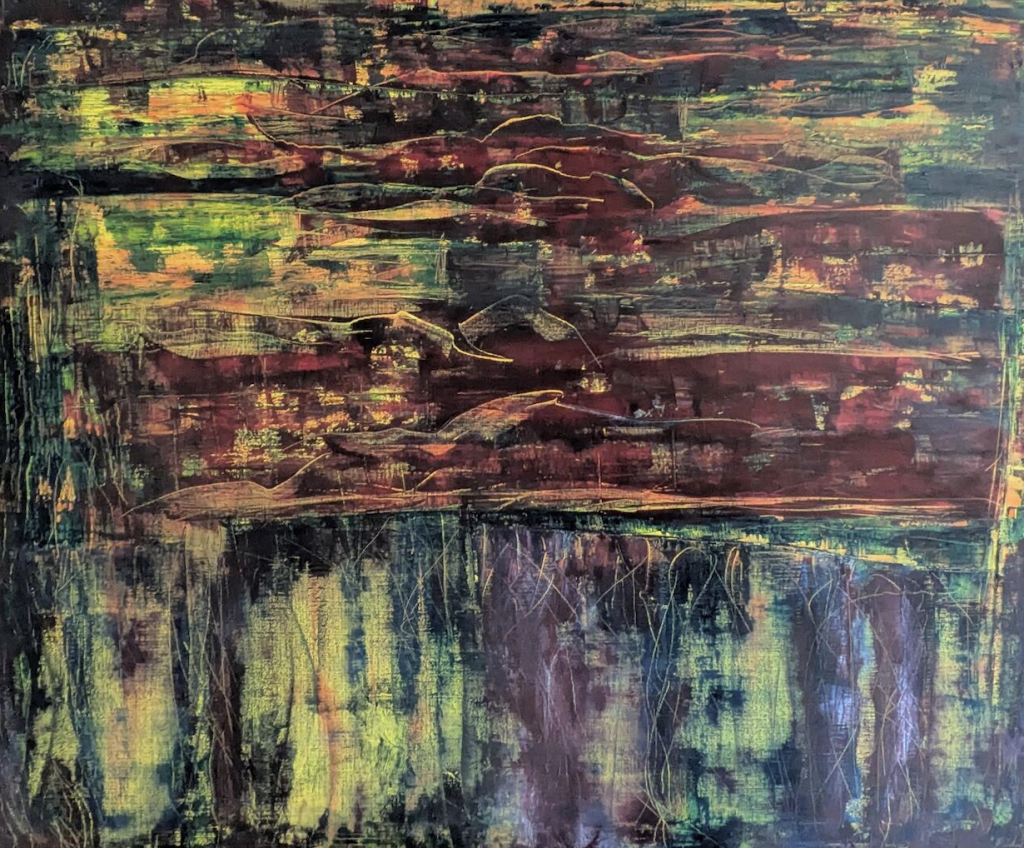
Created in 2026, Alive is an oil painting on canvas measuring 120 by 100 centimeters. The work represents an important stage in Heuer’s transition from figurative painting toward abstraction. Rather than abandoning the visible world entirely, she releases herself from the need to reproduce recognizable subjects. This freedom allows color, movement, memory, and sensation to take on a more independent presence.
The title immediately suggests vitality, but the painting does not illustrate life through a specific figure or event. Its energy emerges from the surface itself. Deep burgundy, moss green, violet, ochre, black, and luminous yellow move across the composition in overlapping layers. Some colors appear dense and settled, while others break through like flashes of light. The eye is drawn from one area to another, following changes in texture, direction, and intensity.
Broad horizontal passages organize much of the upper section. These layered forms may recall distant terrain, reflections on water, geological deposits, or a landscape seen through changing weather. Yet none of these associations becomes permanent. Just as an image begins to form, a scraped mark, interrupted line, or unexpected color unsettles it. Heuer keeps the painting suspended between recognition and uncertainty.
The lower portion introduces a different rhythm. Vertical trails and loosely drawn lines descend through fields of green, blue, violet, and black. These marks can suggest roots, rain, vegetation, or traces left on an aged surface. They also establish a visual counterpoint to the horizontal movement above. The two directions create a subtle tension, making the composition feel grounded and unstable at the same time.
Painting as Accumulated Experience
Layering is central to the character of Alive. Paint is applied, covered, scraped away, and allowed to return in altered form. Earlier decisions remain partially visible beneath later ones. As a result, the work carries a sense of duration. It records not only the final image but also the process through which that image developed.
This accumulation gives the painting a psychological dimension. Human experience rarely arrives as a clear and continuous story. Memories overlap, emotions contradict one another, and moments believed to be forgotten can unexpectedly reappear. The surface of Alive reflects this complexity. Its colors seem to contain histories, with each layer modifying but never completely erasing what came before.
Heuer’s use of oil paint is especially significant. The medium permits both richness and revision. Thick areas create physical weight, while thinner passages reveal fragments beneath the surface. Brushwork and palette-knife marks produce different kinds of energy: one may feel fluid and atmospheric, while another appears sharp, resistant, or deliberately interrupted. The evidence of these actions remains visible, allowing the viewer to sense the artist’s changing decisions.
Although Alive belongs to Heuer’s abstract development, echoes of figurative experience remain. Landscape, architecture, bodies, and lived situations may no longer appear as identifiable subjects, but their underlying rhythms can still be felt. They have been transformed into bands of color, irregular contours, directional movement, and contrasts between density and openness. Abstraction becomes a process of distillation rather than complete removal.
The Freedom of an Unresolved Image
One of the painting’s strengths is its refusal to settle into a single meaning. From a distance, Alive may appear atmospheric and expansive. Viewed more closely, it becomes intensely physical, revealing scratches, stains, edges, interruptions, and layers of pigment. The experience continually shifts between the suggestion of space and an awareness of the painted canvas.
This openness gives viewers an active role. Heuer does not direct them toward one story or emotional response. Instead, the work provides a visual field in which associations can develop gradually. One person may perceive a turbulent landscape; another may recognize a state of emotional transition. The painting accommodates these responses without confirming any of them.
Alive can ultimately be understood as a work about change and the courage required to enter unfamiliar territory. Its freedom feels earned through experimentation, revision, and trust in intuition. Nothing appears completely fixed, yet the composition holds together through its internal rhythm and carefully balanced contrasts.
With Alive, Cordula Heuer establishes abstraction as a deeply personal language. The painting does not simply represent vitality; it performs it. Through color, texture, concealment, and emergence, it presents life as layered, unsettled, and continually becoming.
