

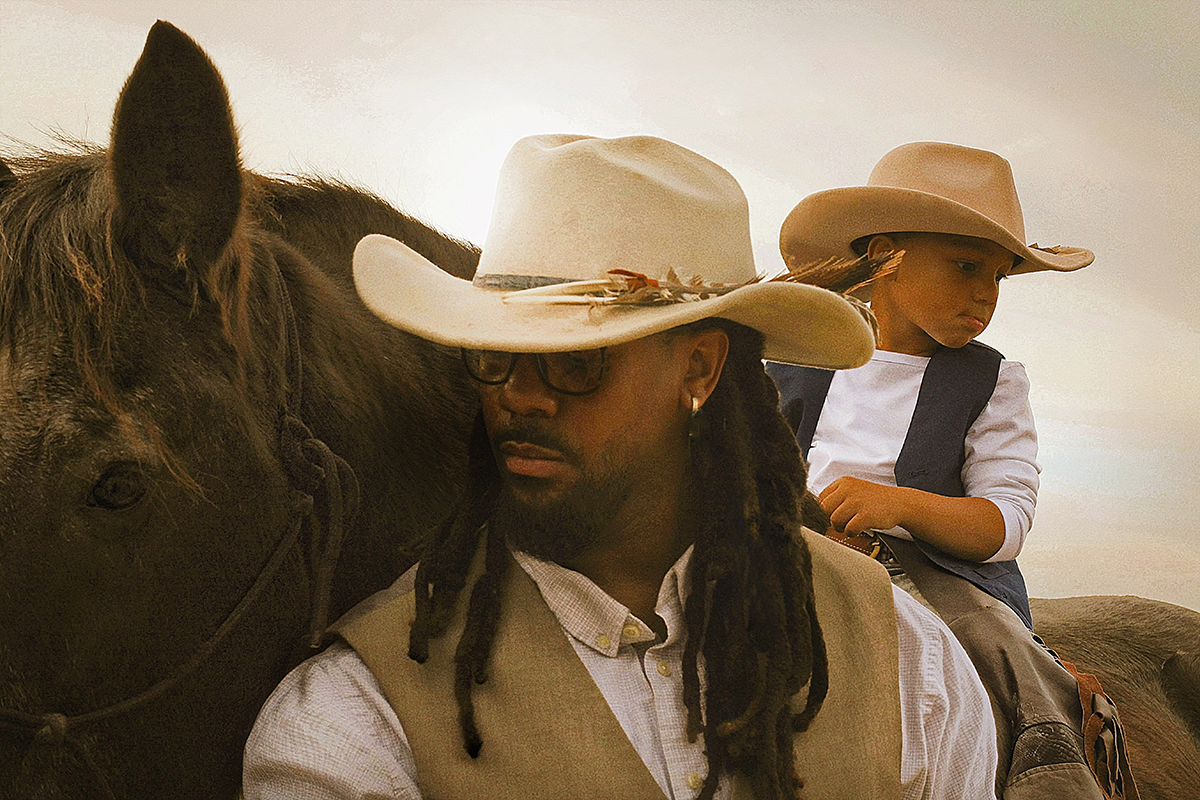
Christopher Diont’e is an American multidisciplinary artist, designer, and visual storyteller whose practice brings together fine art, historical reclamation, textile design, sculpture, and filmmaking. Based on a 100-acre estate in rural Suffolk, Virginia, he draws creative energy from a life shaped by land, livestock, and family. Diont’e is also a professional horse trainer, cowboy, and part-time competitive bull rider. The physical discipline of these pursuits informs his confident handling of texture, color, and material.
Working at the intersection of craftsmanship and Black sovereignty, Diont’e transforms complex histories into emotionally immediate visual experiences. His work can appear warm and inviting while carrying an intensity that continues to resonate beyond the exhibition space. This balance is central to his latest solo exhibition, Ancestral Soil: 1865 – The Foundation of Freeman, Virginia, an ambitious exploration of lineage, freedom, landownership, and inherited resilience, created in collaboration with his four-year-old son, Hovah.
For Diont’e, art is inseparable from fatherhood. As a homeschooling parent, he approaches the creative process as both artistic expression and an immersive form of education. His studio becomes a classroom where history is encountered through family photographs, physical materials, stories, and collaborative decisions. Rather than introducing his son to the past as something distant or abstract, Diont’e allows Hovah to participate directly in preserving and interpreting their family’s history.
This relationship forms the emotional foundation of Ancestral Soil. The exhibition traces Diont’e’s lineage through the years following the abolition of slavery, examining his ancestors’ transition from being treated as property to becoming prominent landowners in Virginia. By bringing this history into a contemporary gallery setting, Diont’e considers what it means to inherit land, identity, memory, and responsibility.
Hovah took part in the exhibition’s research, development, and physical curation. His involvement gives the presentation an intuitive visual rhythm, particularly in its use of color and spatial arrangement. Diont’e’s decision to trust a child’s perspective challenges conventional ideas about who can contribute to serious cultural and curatorial conversations. The resulting exhibition is intellectually grounded without feeling inaccessible. It presents history through the closeness of a relationship between father and son.
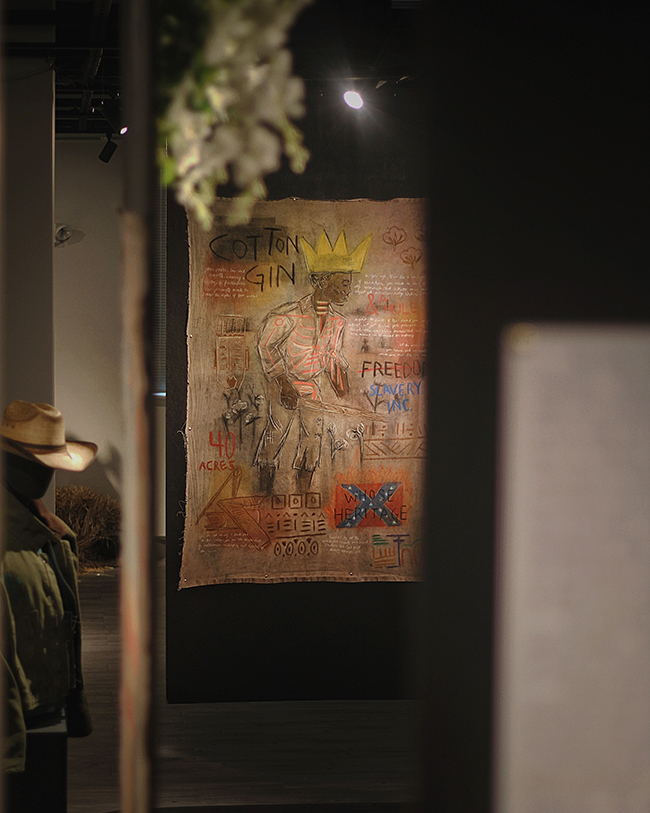
The collection encompasses several forms of visual storytelling. Twenty historical photographs introduce visitors to Diont’e’s ancestors, establishing a direct connection between the people represented and the land they cultivated. Four custom paintings translate elements of this history into richly textured contemporary compositions. Through dense surfaces and deep tonal contrasts, Diont’e creates a tension between refinement and physical strength.
Thirty-five sketches of livestock reflect another essential part of the artist’s life. These works emerge from his daily experience caring for animals and understanding their movement, temperament, and power. The patience required to train a horse and the rapid instinct demanded by bull riding influence the gestures within his work. Animals are not presented merely as rural symbols; they belong to a wider consideration of labor, survival, land, and the relationship between human beings and the natural world.
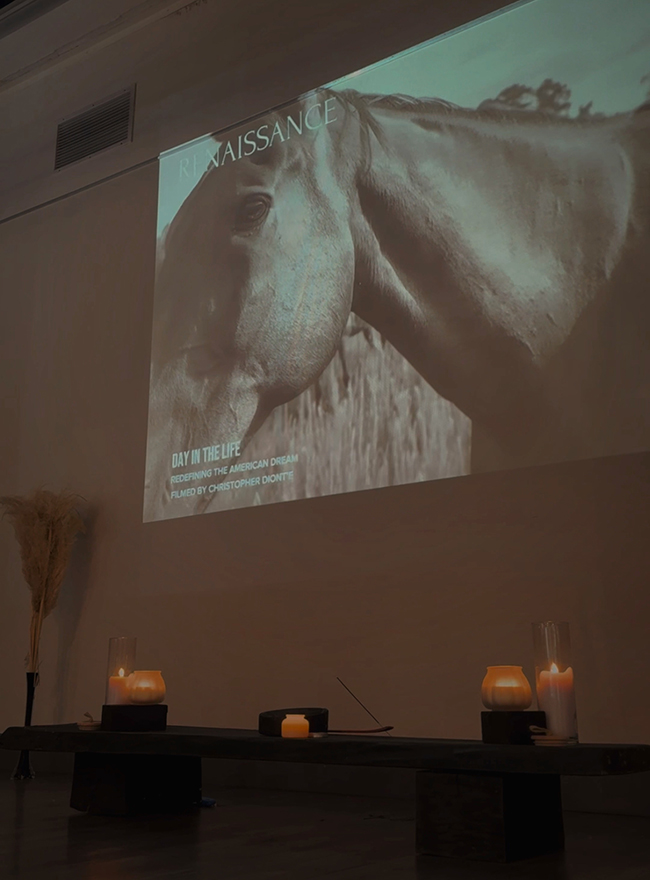
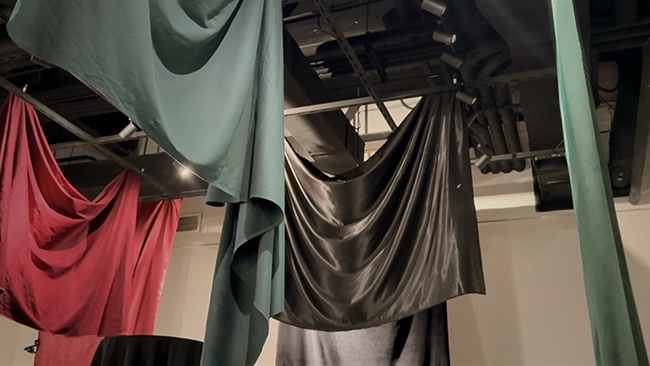
Original fashion textiles expand the exhibition’s material language, demonstrating Diont’e’s ability to move between fine art and functional design. An original short film adds motion, sound, and narrative atmosphere, allowing the exhibition’s themes to unfold cinematically. Together, these elements create an environment in which archival evidence, artistic interpretation, and personal memory continuously interact.
Community participation extends this conversation beyond Diont’e’s own family through Threads of Resilience, a traveling quilt workshop integrated into the exhibition. The program invites residents in every city on the national tour to contribute fabric panels reflecting their vulnerabilities, achievements, heritage, or connection to land. Participants are encouraged to gather, exchange stories, and translate parts of their lives into physical material.
With each destination, the quilt grows. What begins as a collection of individual panels gradually becomes a living archive of American experiences. The act of stitching these contributions together gives visible form to the relationships among personal history, communal memory, and collective healing. The workshop also creates space for open conversation and emotional release, positioning art as an active social experience rather than a static object intended only for observation.
Through Ancestral Soil, Diont’e brings together scholarship, craftsmanship, rural life, and familial intimacy. The exhibition honors the achievements of his ancestors while asking how their legacy can be carried forward. Hovah’s presence ensures that the project looks toward the future as much as it examines the past.
The exhibition ultimately presents inheritance as something alive: a history to study, a responsibility to hold, and a story that can be continually expanded. By uniting painting, photography, drawing, textiles, film, and community participation, Diont’e creates a powerful meditation on freedom and belonging. Ancestral Soil demonstrates how one family’s journey can open a much broader conversation about memory, resilience, and the enduring relationship between people and the land beneath them.
