

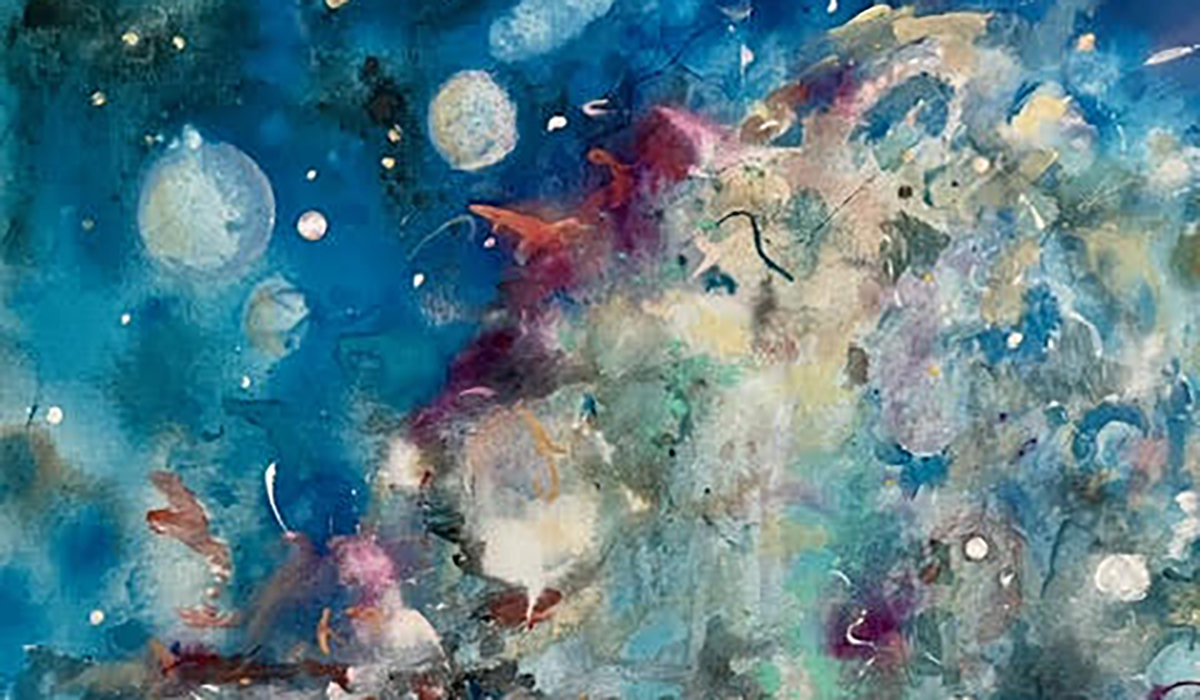
For Cheryl Crane-Hunter, painting offers a meaningful avenue for exploring the relationship between human experience, the natural world, and spiritual belief. With a background in art education, she brings together artistic knowledge and personal intuition, developing a visual language that communicates emotions beyond the limitations of words. Her creative practice is deeply rooted in sensitivity, reflection, and an appreciation for the mysteries of existence.
Through expressive colors, layered textures, and symbolic imagery, Crane-Hunter transforms personal experiences into compositions that resonate on a universal level. Light frequently emerges as an essential element in her work, suggesting hope, spiritual presence, and the possibility of renewal. Rather than simply representing the physical world, she seeks to reveal the emotional and spiritual dimensions that exist beneath its surface. Her paintings invite viewers to embrace moments of contemplation, discover beauty within uncertainty, and consider the enduring connections that transcend the boundaries of earthly life.
Over the Rainbow: A Vision of Hope and Spiritual Reunion
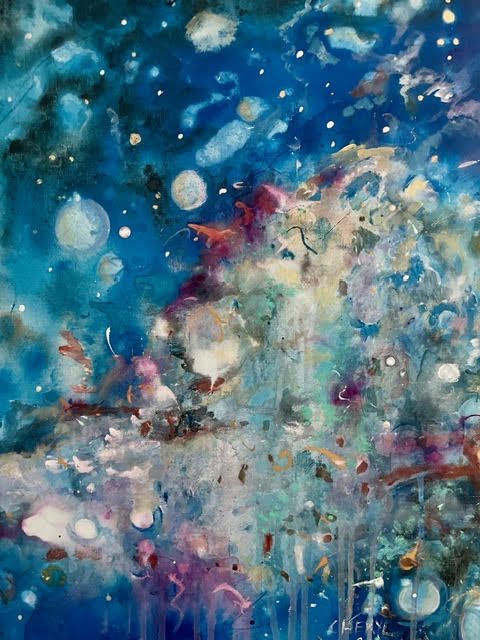
In Over the Rainbow, a 22 × 25 mixed-media artwork combining ink washes and acrylic on canvas, Crane-Hunter explores the profound relationship between grief, faith, and eternal love. Created during an exceptionally difficult period marked by the passing of her father, her husband’s father, and a baby grandchild within a single year, the painting becomes an intimate expression of remembrance and spiritual consolation.
Rather than presenting sorrow through darkness or isolation, the artist transforms her experience of loss into a luminous composition filled with movement, color, and emotional depth. The artwork reflects her belief that death does not represent the end of human connection but a passage toward an eventual reunion in heaven.
The composition unfolds through an extraordinary interplay of deep blues, turquoise, soft whites, muted pinks, and delicate golden accents. These colors merge and separate across the canvas, creating an atmosphere that feels simultaneously celestial and deeply personal. The dominant blue tones establish a sense of infinity, recalling the vastness of the night sky and suggesting a realm beyond ordinary perception.
Throughout the painting, scattered points of light and rounded, translucent forms appear to float within the surrounding atmosphere. Their delicate presence evokes distant stars, spiritual energies, or fragments of cherished memories. Although these elements remain abstract, they contribute to the impression of a universe alive with unseen connections.
One of the most compelling aspects of Over the Rainbow is its upward visual movement. Organic shapes and expressive passages of color guide the viewer’s gaze toward the upper regions of the canvas, creating a sense of spiritual ascension. This directional flow reflects Crane-Hunter’s intention to evoke heaven as a place of peace and eventual reunion. The movement becomes a metaphor for the soul’s journey beyond physical existence, carrying with it the promise of continued love.
The combination of ink washes and acrylic paint enhances the emotional complexity of the work. The fluidity of the ink introduces transparency and spontaneity, while the acrylic passages provide texture, substance, and visual intensity. Together, these materials establish a dialogue between permanence and impermanence, echoing the fragile nature of life and the enduring strength of memory.
Within the central and lower areas of the composition, overlapping colors create a rich accumulation of visual activity. Soft pinks and warm reddish tones emerge among cooler shades, introducing moments of tenderness and emotional warmth. These contrasting passages suggest the coexistence of sorrow and gratitude, acknowledging that grief often carries within it the beauty of having loved deeply.
The title, Over the Rainbow, further enriches the painting’s symbolic meaning. A rainbow traditionally represents hope, transformation, and the emergence of light following a storm. Here, the concept extends beyond a natural phenomenon, becoming an expression of faith in a peaceful existence beyond earthly suffering. It suggests a destination where separation gives way to reunion and where the bonds between loved ones remain unbroken.
Crane-Hunter’s decision to communicate through abstraction allows the painting to extend beyond her individual circumstances. Viewers who have experienced bereavement may discover their own memories and emotions within its shifting forms. The absence of clearly defined figures creates space for personal interpretation, allowing the artwork to become a shared experience of remembrance and healing.
Ultimately, Over the Rainbow stands as a deeply moving testament to the resilience of the human spirit. Crane-Hunter does not deny the pain of loss; instead, she acknowledges it while embracing the comforting possibilities offered by faith. Through luminous colors, ascending movement, and atmospheric textures, she creates a visual sanctuary where grief can coexist with hope.
The painting leaves viewers with a gentle yet powerful message: although physical presence may disappear, love continues to exist beyond visible boundaries. In transforming personal sorrow into an uplifting artistic vision, Crane-Hunter celebrates the enduring promise of spiritual connection, eternal peace, and the possibility of being reunited with those we hold dear.
