

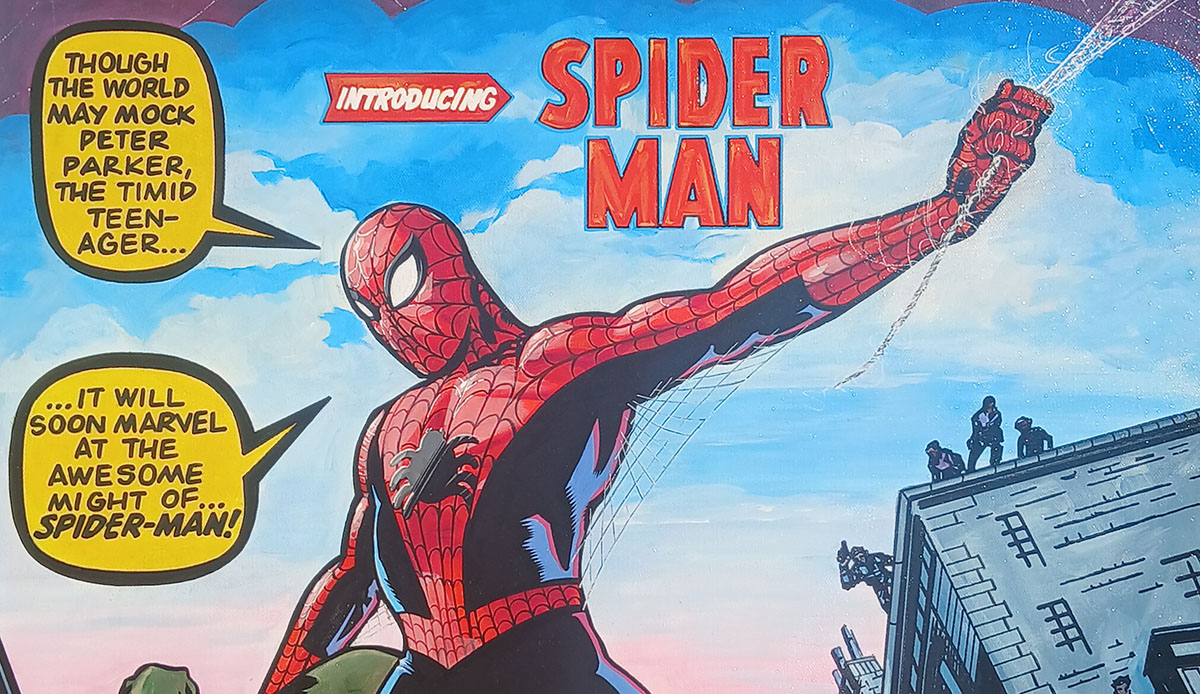
The name Peter Parker never enters quietly. It carries with it a long history tied to comic culture, a built-in narrative, and a familiarity that immediately draws attention. When a body of work is received under that name, it naturally sparked a question. Is it an actual identity, or is it a deliberate reference? In the end, that question becomes less important. What carries weight is the role the name points to.
Here, Peter Parker is not the artist creating the paintings. He stands just outside the center, in a position that often remains unnoticed. His role is grounded in support. He backs, encourages, and helps sustain the artist responsible for the work. It is not a role that seeks visibility, yet it quietly determines what can come into being. The paintings themselves are rooted in the visual language of American comic books, brought forward through the work of Pete “PG” Garcia. This creates a layered dynamic where authorship, support, and influence exist together rather than separately.
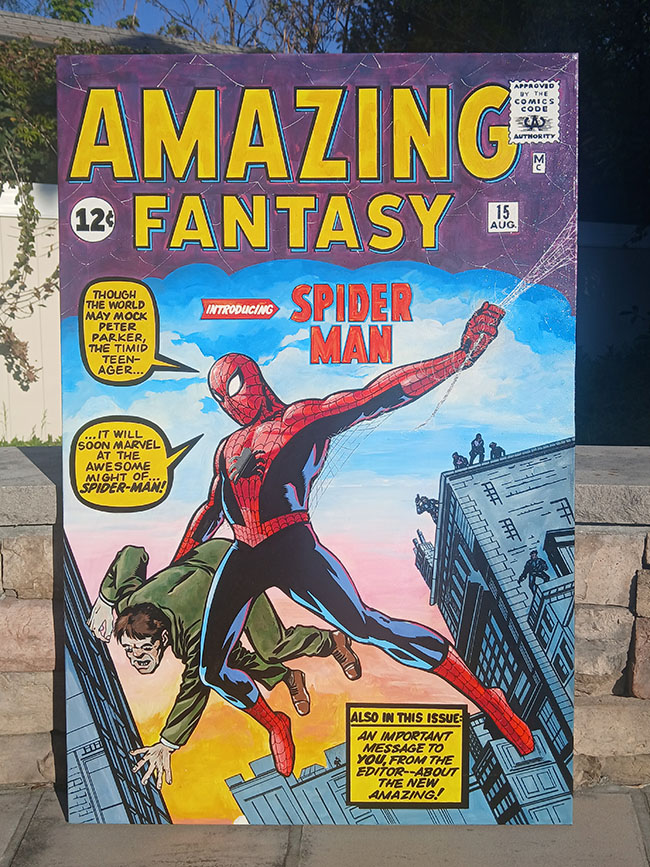
There is a directness to these paintings. They do not hold back or soften their presence. Instead, they move forward with clarity, drawing from the established structure of comic art. This is visible in the compositions, in the pacing of each image, and in the way visual elements compete while still maintaining balance. The work reflects different periods of comic history, from early storytelling formats to later, more expressive approaches.
The piece focused on Dessad from Forever People #4 makes this especially clear. Dessad is not a restrained character. He is meant to unsettle. Originating from Apokolips, he serves Darkseid, though never in a simple or predictable way. His presence operates within a system defined by fear, control, and calculation. There is always something beneath the surface. He appears obedient, yet there is tension within that obedience. His loyalty feels measured, shaped by awareness and intent.
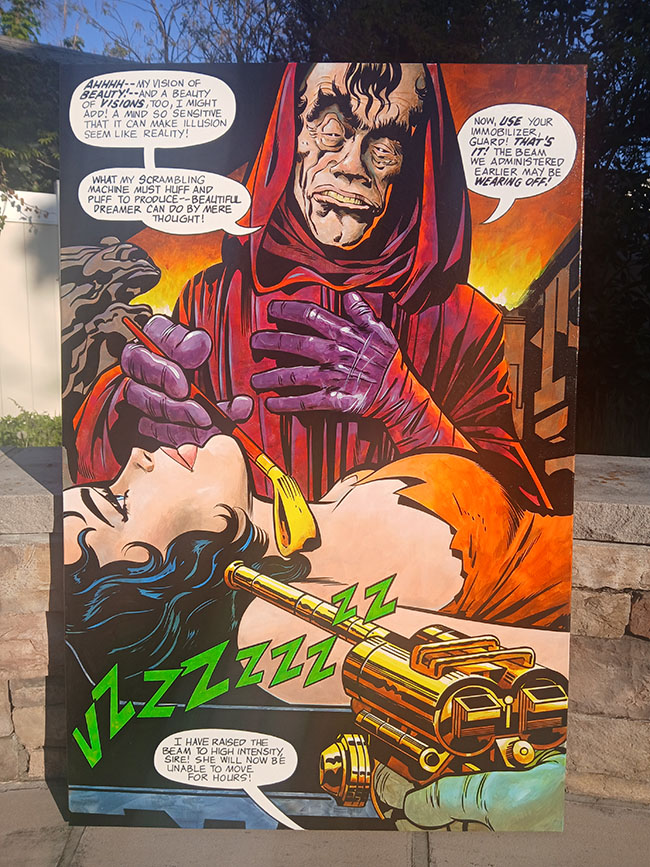
This contradiction carries into the visual construction. The figure does not feel at rest within the frame. There is tension in the posture, in the tightening of the lines, and in the density of the surrounding space. The image feels compressed, as if it is holding something back. That restraint builds unease. It is not chaotic, but controlled, and that control gives it strength.
The visual language used to form Dessad follows a tradition rooted in classic comic work, particularly the bold, structured approach associated with Jack Kirby. Form and silhouette are emphasized. Shapes are pushed slightly beyond realism to heighten emotional impact while maintaining clarity. This clarity is essential in comic-based imagery, where immediate recognition plays a key role.
Color, when used, is intentional. It is not there to decorate. It guides the eye, builds contrast, and reinforces the emotional tone of the scene. In a character like Dessad, color often moves toward extremes, strengthening both instability and control at once. Even in stillness, the image feels active.
Another layer appears in the separation between the name attached to the work and the artist who created it. These paintings are made by Pete “PG” Garcia, yet they are presented under the name Peter Parker. This creates a subtle shift in perception. It suggests that art does not always emerge from a single visible source. It can be shaped and supported by someone who remains just outside the frame.
This reflects the structure of comic production itself. A finished image often carries the contributions of multiple people, even if one name stands at the front. Writers, inkers, colorists, and editors all play a role. Here, that structure appears in a more personal way. The supporter and the artist exist alongside each other, both essential to what becomes visible.
The choice of Dessad as the subject reinforces this idea. He is a character built on hidden motives and layered intent, which mirrors the way the work is presented. There is a quiet alignment between the subject and the process behind it. The image reflects not only the character, but also the conditions that made it possible.
This is where the work settles. It does not attempt to simplify or resolve these layers. Instead, it allows them to remain present. The name, the support, the artist, and the subject all exist at once. That tension gives the work its edge. It is shaped not only by what is shown, but by how and why it comes into view.
