

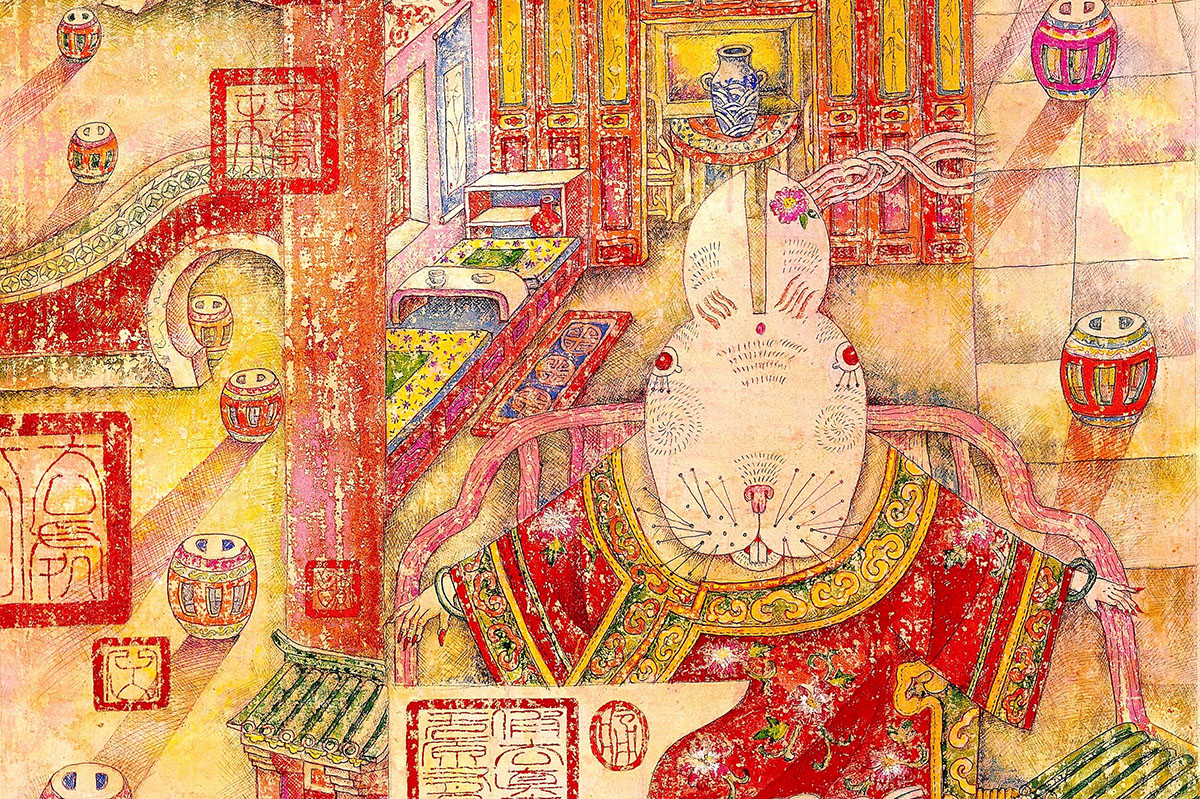
Born in 1950, Huang YI Min grew up during a time when China was undergoing immense political and social transformation. Those years left a lasting impression on the way she experiences both the world and her artistic practice. For Huang, painting has never been limited to recording what is visible. Instead, it becomes a place where personal memory, historical atmosphere, emotion, and imagination coexist. The environments she moved through in her early life, along with the cultural tensions surrounding her generation, continue to shape the emotional language of her work.
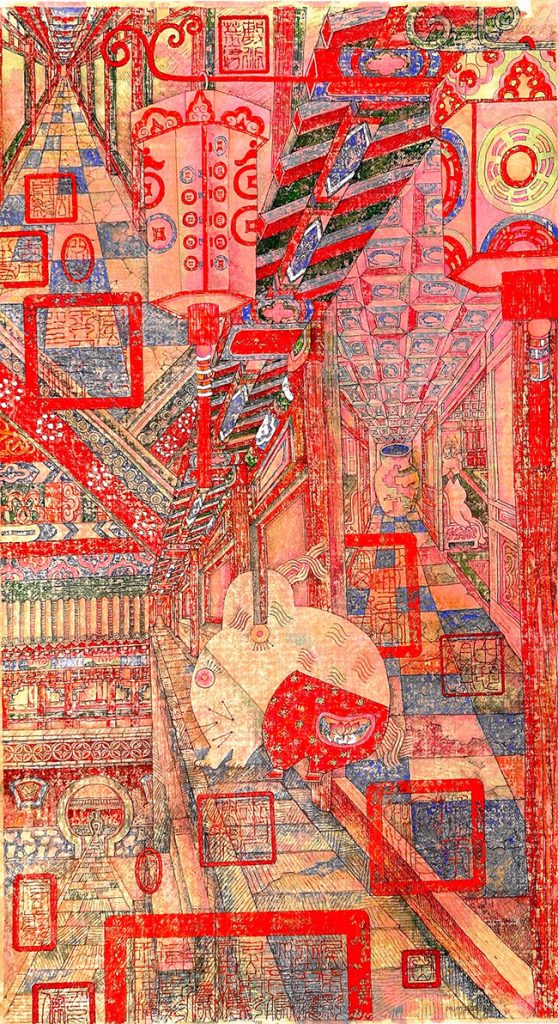
Rather than separating reality from fantasy, Huang allows the two to merge naturally. Her paintings often feel suspended between recollection and dream, carrying traces of lived experience while also drifting into symbolic and psychological territory. Literature, architecture, folklore, and personal reflection all become part of the same visual conversation. Over time, her work has developed into an exploration of how memory transforms itself — how places become haunted by emotion, and how history survives not only through facts, but through atmosphere and imagination. This layered approach gives her paintings a deeply reflective quality, where the past is never entirely distant, but continues to echo through the present.
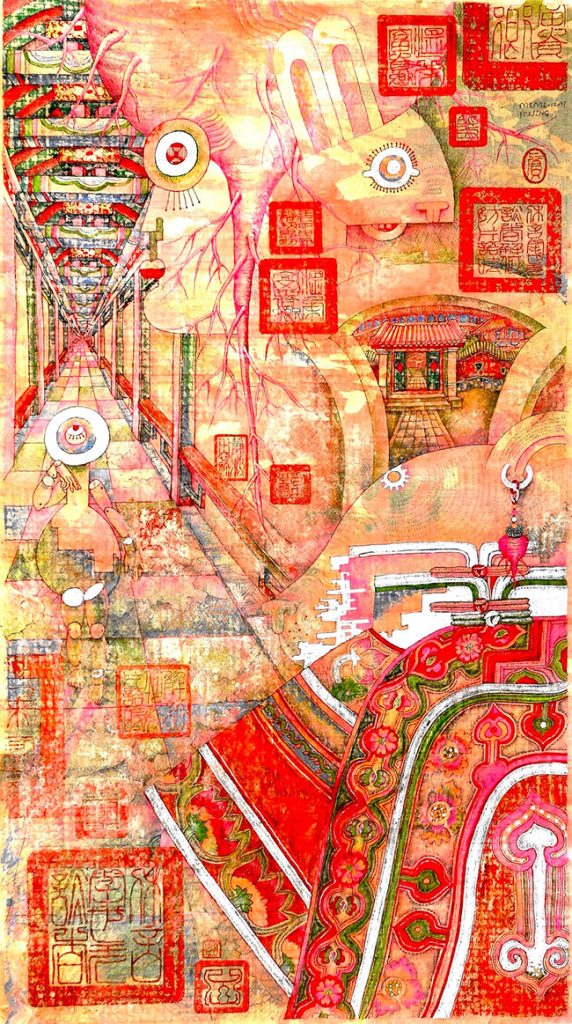
One of Huang YI Min’s most personal and emotionally layered bodies of work is her series The Red Chamber in My Dream of Painting. The series emerged from her lifelong relationship with the classic Chinese novel Dream of the Red Chamber, written during the Qing Dynasty by Cao Xueqin. Huang first encountered the novel as a teenager, later returning to it many times throughout her life. With each reading, the story revealed something different to her. What began as literary admiration gradually became a meditation on memory, illusion, longing, and the fragile nature of human existence.
The novel itself has long occupied an important place within Chinese culture. Cao Xueqin completed only the first eighty chapters before his death, while the conclusion was later finished by an unknown writer. That unfinished quality appears to resonate deeply with Huang. She approaches the text not as fixed literature, but as a living emotional landscape that changes according to the reader’s experiences. Over time, her own life became inseparable from the world of the novel, eventually leading her to create paintings that merge her personal reflections with the symbolic universe of Dream of the Red Chamber.
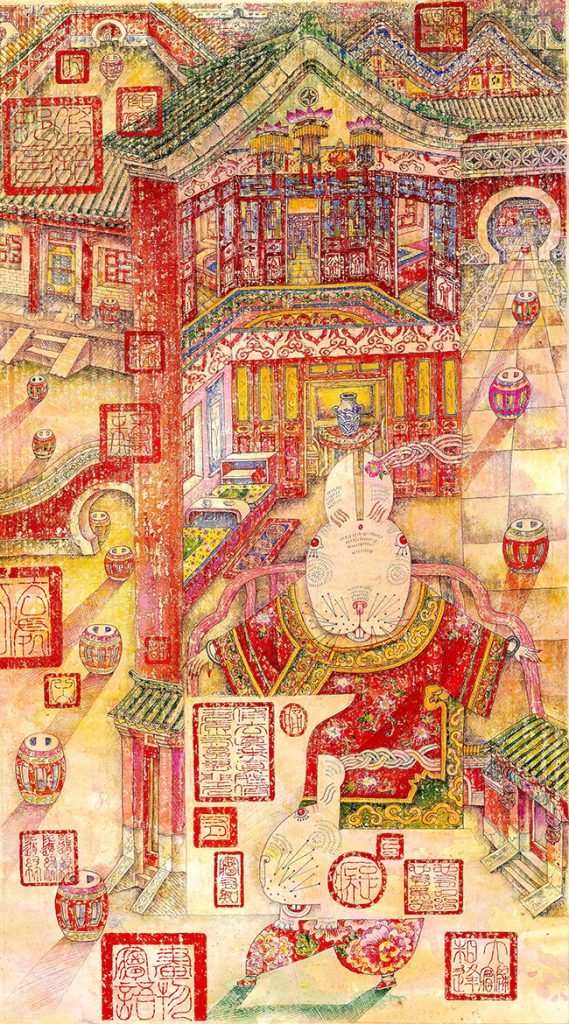
A major source of inspiration for the series came from Prince Gong Mansion in Beijing’s Shichahai district. Some historians believe the mansion may have served as a model for the Jia Mansion described in the novel. Huang became fascinated with the site and visited it repeatedly, wandering through its gardens during both day and night. The atmosphere of the estate deeply affected her imagination. The silence of the courtyards, interrupted only by birdsong, created the sensation of stepping outside ordinary time. The space appeared elegant and distant, as though remnants of another century still lingered in the air.
Huang immersed herself completely in the environment. She became acquainted with the caretaker and convinced him to illuminate every lantern in the garden at night. Under the glow of lantern light, the mansion transformed in her imagination into the living world of the Jia family. The boundaries between fiction and physical reality began to dissolve. Stories shared by locals added further layers to the experience. Tales of ghosts wandering through the courtyards, including legends surrounding the tragic figure Qin-shi, intensified the emotional atmosphere surrounding the estate.
These encounters with folklore became an important part of Huang’s artistic process. On snowy winter days, gatekeepers claimed to see white foxes darting through the grounds. At the Fox Immortal Shrine, nearby residents burned incense and prayed for protection. Such moments reinforced Huang’s growing sense that the mansion existed simultaneously in reality and myth. The garden became more than architecture; it became a psychological and spiritual landscape shaped by centuries of memory, storytelling, and imagination.
After months of wandering through the estate, Huang came to know every path, pavilion, and hidden corner intimately. The setting became so deeply embedded in her mind that she could visualize it with her eyes closed. It was during her third reading of Dream of the Red Chamber that the concept for her painting series fully emerged. The work developed from a space between understanding and uncertainty — between clarity and emotional confusion.
In describing the atmosphere of the series, Huang speaks of a distant wash of pink spreading across the horizon, like a vision of worldly splendor glimpsed from afar. Yet when approached closely, the Red Chamber appears empty, even while seeming filled with activity. This contradiction lies at the center of the paintings. Grandeur and emptiness exist together. Celebration contains loneliness. Beauty carries traces of decay.
Philosophical reflections from the novel also play an important role within the series. Huang recalls the words of a monk whispering ideas about falsity, obsession, truth, and illusion. These concepts stayed with her for an entire year, becoming central to the emotional terrain of the paintings. Rather than presenting fixed answers, the series embraces uncertainty. Human emotions — love, sorrow, ambition, longing — appear temporary and elusive, yet deeply consuming.
Through these works, Huang connects the emotional world of the eighteenth-century novel to modern existence. The final image she evokes is that of Baoyu departing into a vast white landscape after abandoning worldly life. In Huang’s interpretation, this becomes a reflection on contemporary humanity itself — restless, searching, burdened by desire, and ultimately moving toward the unknown. Her paintings do not attempt to resolve these contradictions. Instead, they dwell within them, transforming literature, memory, and personal experience into dreamlike visual meditations on the passing nature of life.
