

Victoria Ascanio’s story begins in Spain, where she was born and raised, surrounded by a culture that carries deep artistic history, layered traditions, and a persistent sense of poetry in everyday life. That early grounding would stay with her, even as her path took her beyond Spain’s borders. She studied Fine Arts at Madrid University, building a technical foundation while also shaping a view of art as something deeply rooted in human sensitivity. Later, she moved to England and continued her creative pursuit at the Ruskin School of Art in Oxford, where she focused on printmaking. Her commitment to the medium was not only personal but also communal—she became a Founder Member of the Oxford Printmakers Cooperative Association, helping build a place where artistic exchange, learning, and experimentation could exist collectively. Over time, her work traveled across Europe and the United States, entering private and public collections, speaking to viewers in quiet yet persistent ways.
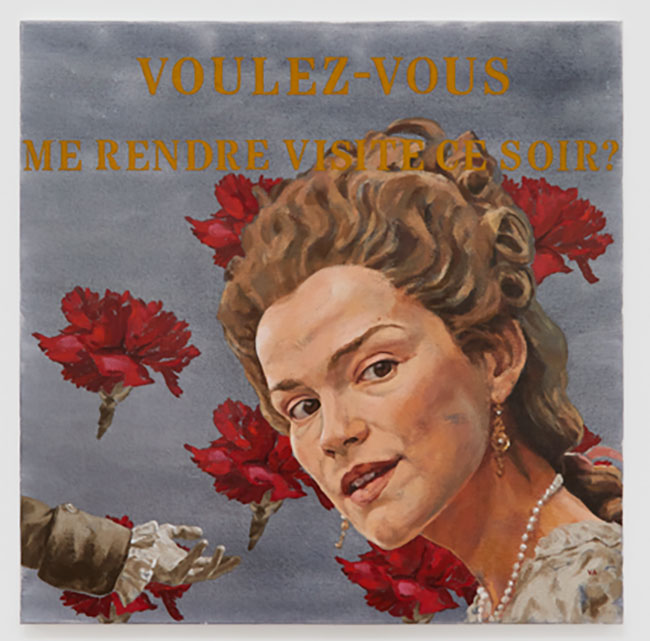
Ascanio’s artistic practice is rooted in a deep respect for process. Printmaking, unlike many impulsive forms of art, requires patience, precision, repetition, and trust in the gradual unfolding of an image. It is a medium where intention meets unpredictability. In that balance, she seems to find her voice. There is discipline in her approach, but also softness. Her work holds space for emotion and memory without shouting for attention. Instead, it breathes. It unfolds slowly. It allows viewers to return again and again, always finding something slightly different.
Growing up in Spain and then planting creative roots in England gave Ascanio a kind of dual perspective: familiar warmth intertwined with observational distance. The cultural richness of Spain meets the intellectual rigor of her English art training. This layered background translates into artworks that feel lived-in, emotionally resonant, and quietly reflective. Her compositions often suggest movement between worlds—inner and outer, past and present, real and imagined. They do not rely on loud theatrics; they speak through nuance, subtle marks, delicate contrasts, and thoughtful layering.
Printmaking also offers a strong sense of structure, something Ascanio embraces without becoming rigid. There is care in the way each surface holds ink, in how lines, textures, and tonal shifts build atmosphere. Her works invite viewers closer, asking them to slow down, to notice small details rather than rushing to immediate conclusions. In a world that often demands instant clarity, her art instead values contemplation. It opens the possibility that reflection can be a form of connection, that time spent with an image is time spent with a part of oneself.
Being part of the Oxford Printmakers Cooperative was not just about participation in an artistic group; it was about supporting a shared ecosystem of creativity. It reflects her belief that art grows in environments where exchange happens freely. Within that space, artists work side by side, learning through proximity, conversation, and the shared struggles of process. Ascanio’s work carries that sense of dialogue. Even as an individual expression, it feels aware of a wider creative conversation, shaped by both heritage and community.
Her international exhibitions across Europe and the United States reveal how her art resonates beyond geography. Yet her identity is never lost in movement. Spain, Oxford, and the broader world all inhabit her visual language. Each place seems to have left a gentle imprint. Her pieces feel like quiet bridges, connecting places, cultures, and emotional states. They do not insist on one meaning. Instead, they offer room for different interpretations, depending on who stands in front of them.
Collectors—private and public alike—have been drawn to her art, perhaps because it carries that rare combination of technical groundedness and emotional openness. Her work does not simply decorate space; it inhabits it, bringing with it a sense of introspection. It can feel intimate, yet it remains expansive enough for others to see themselves inside it.
What stands out about Victoria Ascanio is not dramatic spectacle but depth. Her artistic path reflects commitment, curiosity, resilience, and sensitivity. From early studies in Madrid to her printmaking immersion in Oxford, from founding a cooperative to presenting work internationally, she has moved with purpose while letting her practice remain human, thoughtful, and sincere.
Her prints quietly remind us that art does not need volume to matter. It can whisper. It can sit with us. It can reflect the delicate rhythm of life—the parts that are structured, the parts that are uncertain, and the parts that are deeply felt yet hard to explain. Through her work, Victoria Ascanio shows that patience, reflection, and craft still hold power in the contemporary art world, offering a place where viewers can slow down, breathe, and simply be present with an image that carries layers of experience and care.
