
Born in Siena, Italy, Luciano Caggianello has built a creative practice that moves comfortably between art and design, drawing on decades of experience across advertising, illustration, graphic design, industrial design, and automotive design. This broad professional background has shaped a visual approach that values both precision and thoughtful inquiry, allowing technical skill to support ideas rather than overshadow them. Alongside his design career, Caggianello steadily cultivated an independent artistic practice focused on exploring identity, memory, perception, and the complexities of human experience. His works have been exhibited throughout Italy and internationally, reflecting an ongoing commitment to investigating how visual forms can communicate philosophical ideas. Now living and working in Turin, Caggianello continues to produce sculptures, paintings, and mixed-media pieces that encourage viewers to think beyond what they immediately see. Rather than offering straightforward answers, his works create opportunities for reflection, inviting audiences to consider the relationship between objects, language, history, and the many ways people interpret the world around them.
The Weight and Freedom of Language
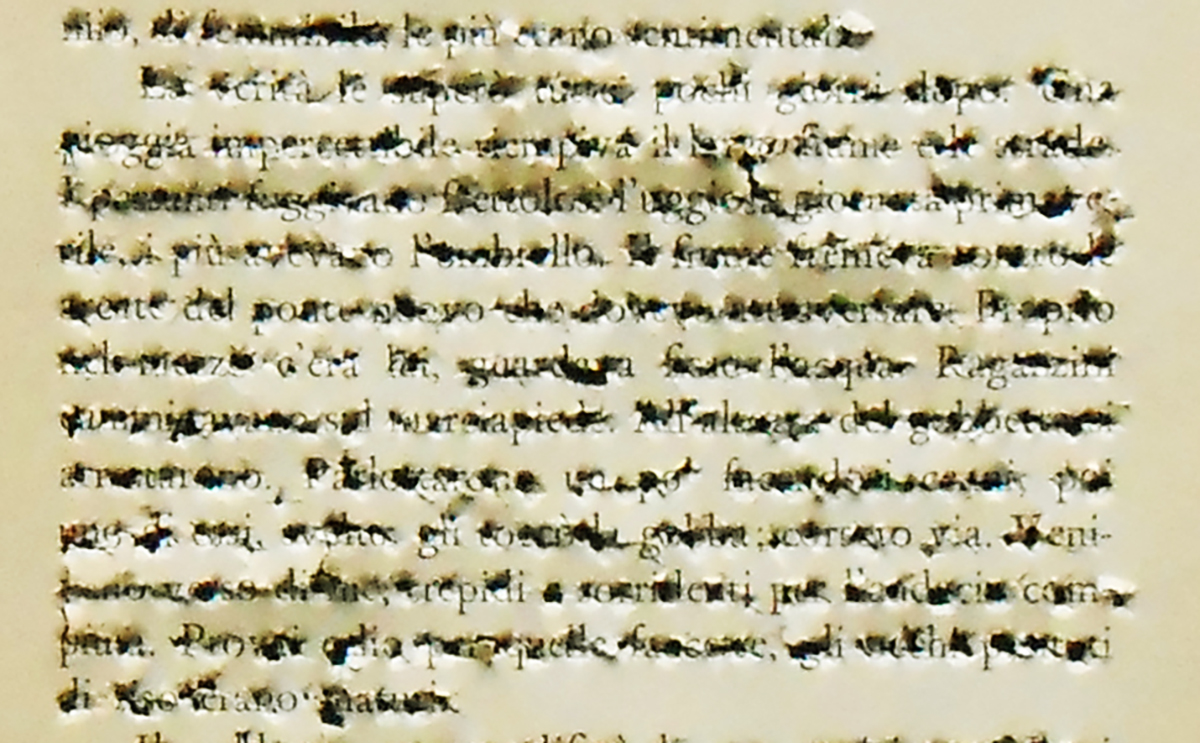
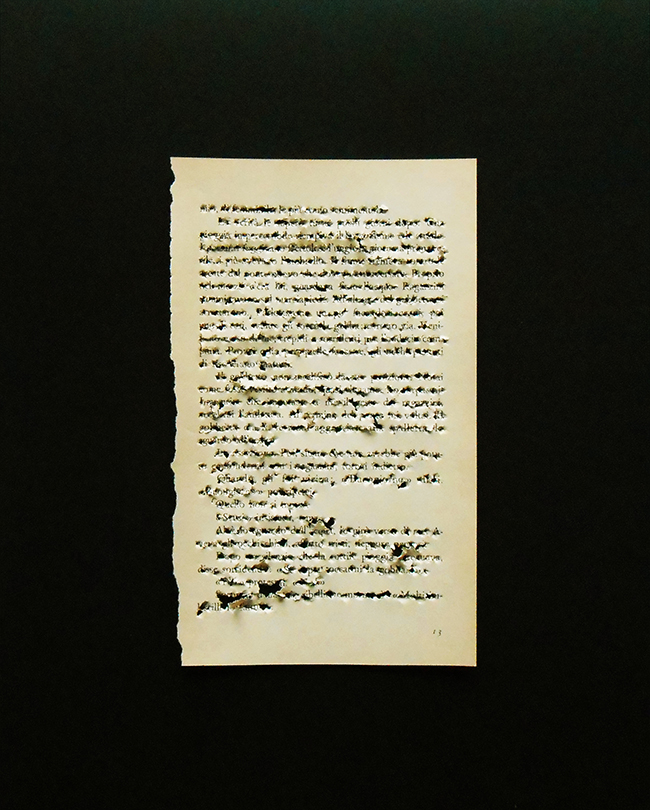
Luciano Caggianello’s The Fear of Words (2024) is a work that examines one of humanity’s most powerful tools: language. Created from manipulated paper, the piece transforms an everyday material into a thoughtful meditation on communication, knowledge, and the choices people make when engaging with ideas. Although visually restrained, the artwork carries a rich conceptual foundation, demonstrating how simple materials can hold profound meaning when placed within the right context.
Paper occupies a unique place in human history. It preserves stories, records discoveries, communicates beliefs, and documents social change. By selecting manipulated paper as both medium and message, Caggianello highlights the physical presence of language while reminding viewers that words themselves are never entirely fixed. They can be folded, erased, reshaped, hidden, or revealed, much like the paper that carries them.
At the heart of The Fear of Words is the belief that the history of civilization is inseparable from the history of language. Every period of progress, conflict, cooperation, and transformation has been accompanied by words that explain, persuade, question, or challenge existing ideas. Language allows societies to exchange knowledge across generations, making it one of humanity’s most valuable cultural resources.
Rather than celebrating language in a simplistic way, Caggianello focuses on the responsibilities that accompany it. Words can create dialogue, encourage understanding, and expand perspectives, but they can also become tools for exclusion when they are used without reflection. The artwork asks viewers to consider whether communication is being used to open conversations or to close them.
The artist contrasts two opposing approaches to language. On one side stand openness, exchange, curiosity, and critical thinking. On the other are rigid certainty, dogmatism, and discrimination. This contrast is not presented as a political slogan but as a broader philosophical observation about the ways people relate to knowledge. Genuine understanding, the work suggests, grows through questioning rather than unquestioning acceptance.
Manipulating the paper becomes an important metaphor within this framework. The altered surface reflects the way meaning changes over time. Ideas evolve as societies change, while individual experiences continually reshape how words are understood. Just as paper can be bent without losing its identity, language remains flexible, adapting to new contexts while carrying traces of its past.
The artwork also explores the importance of observation. Caggianello proposes that understanding begins not with immediate judgment but with careful attention. Looking closely, listening carefully, and thinking critically become essential acts of participation in the world. Observation is not passive; it represents the first step toward meaningful engagement with history, culture, and contemporary life.
One of the most compelling aspects of The Fear of Words is its rejection of easy solutions. The artist suggests there are no formulas capable of protecting society from difficult conversations or uncomfortable truths. Progress does not come through avoiding challenging ideas but through engaging with them honestly and thoughtfully. Intellectual openness, even when it introduces uncertainty, remains necessary for genuine growth.
The title itself introduces an intriguing tension. Fear often arises from misunderstanding or unfamiliarity, yet words are also the means through which understanding becomes possible. By placing these ideas together, Caggianello invites viewers to examine their own relationship with language. Are certain words avoided because they challenge long-held assumptions? Can dialogue continue when disagreement exists? These questions remain intentionally unresolved, allowing every viewer to bring personal experience into the interpretation.
Despite addressing complex philosophical themes, The Fear of Words remains visually understated. The work avoids dramatic spectacle, relying instead on subtle material intervention to encourage slow contemplation. This restraint reflects Caggianello’s broader artistic philosophy, where meaning develops gradually through sustained attention rather than immediate visual impact.
Ultimately, The Fear of Words reminds us that language is neither inherently liberating nor restrictive. Its influence depends on how it is used and how willing people are to approach it with curiosity, honesty, and critical reflection. Through manipulated paper, Luciano Caggianello creates a work that quietly encourages viewers to value thoughtful dialogue over certainty and understanding over fear, reaffirming the enduring importance of words in shaping both individual experience and collective history.
