

Derrick Bullard picked up a paintbrush as a teenager and didn’t put it down. Back then, he was navigating life with undiagnosed ADD and trying to find something that could hold his attention. School didn’t. Neither did most hobbies. But painting did. It was the one thing that asked nothing more than time, focus, and a willingness to show up. That was enough to keep him going.
He talks about painting less as a talent and more as survival. The brush gave him structure when nothing else did. It offered him a place to release energy that might otherwise have gone restless and scattered. Over the years, what began as a way to pass time became the ground where he discovered patience, presence, and a voice that didn’t need to explain itself. Today, Bullard’s art continues to carry that quiet persistence—a daily return to canvas and color.
Bullard describes his paintings as reflections of letting go. They are not planned in advance, not drafted with rigid outlines or predetermined results. Instead, they unfold slowly, like conversations that take years to finish. His process is rooted in patience. Some works, he says, sit with him for over a decade before they feel finished. The time between the first layer and the last becomes part of the painting itself—a record of change, return, and release.
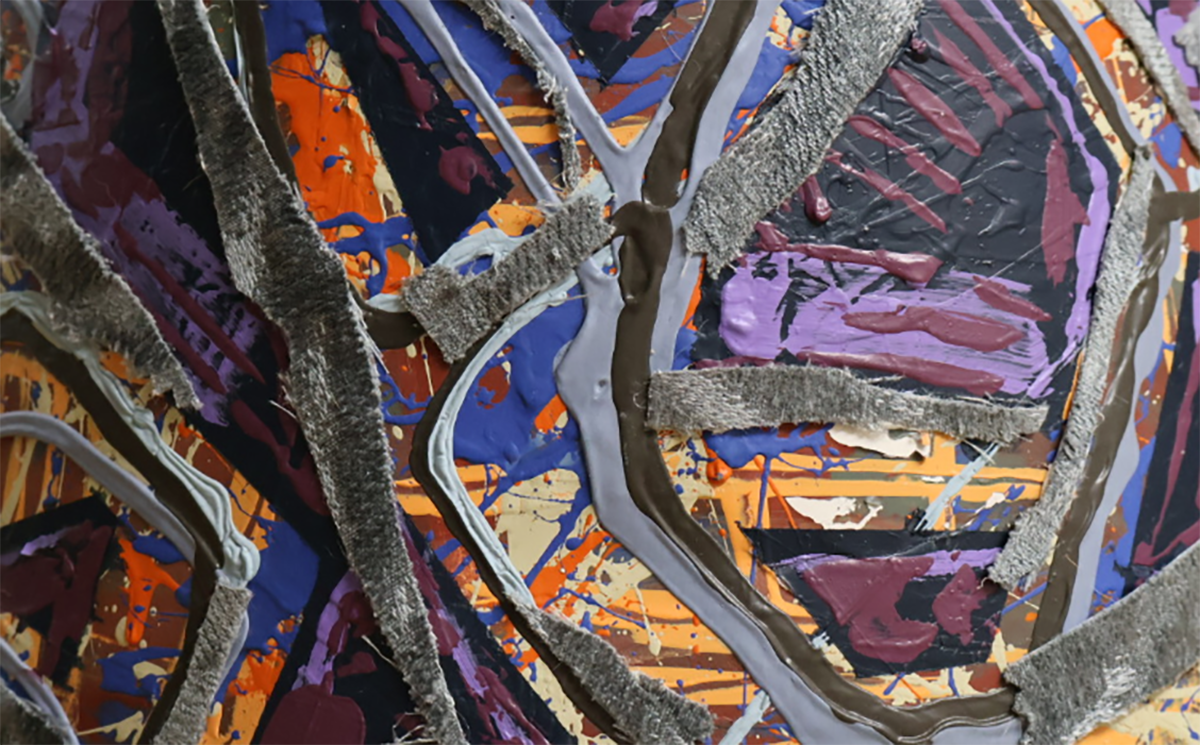
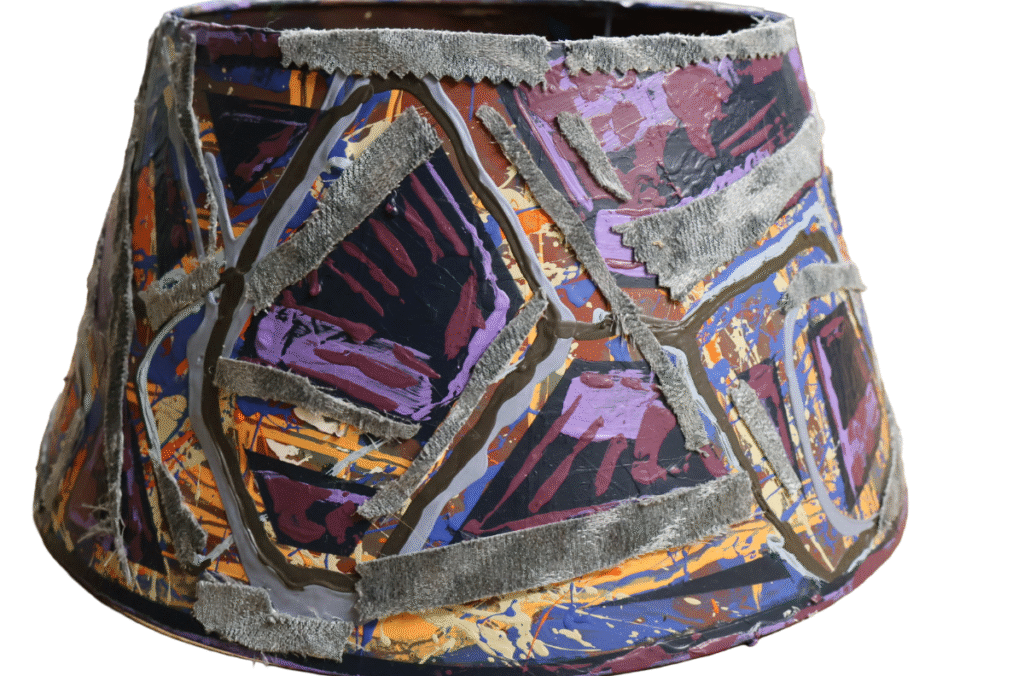
A work like his abstract painting on a lampshade makes this approach tangible. The materials—acrylic paint on fabric stretched over the rounded surface—suggest both intimacy and impermanence. A lampshade is not a canvas in the traditional sense. It is something from the everyday, something that might sit in the corner of a room. By choosing it, Bullard folds art back into daily life, insisting that even the most ordinary object can hold a layered story.
The layers matter most. Bullard works in them deliberately, stacking color upon color until the surface becomes a field of history. Each coat covers, but also preserves what came before. The earlier marks are not erased but transformed into whispers under the surface. For the artist, this layering is more than technique—it is philosophy. To him, painting is a mirror of living. We move through days and years, carrying forward everything we’ve already been. What we once thought finished becomes the underlayer of something new.
Sitting with a canvas—or with a lampshade—he enters what he calls a dialogue. This dialogue is not with words but with silence. The work takes shape in moments when nothing is forced. The brushstrokes come only when the quiet has lasted long enough to reveal them. In this way, Bullard resists the rush of modern life. He makes art that asks for stillness, both from himself and from those who encounter it.
Looking closely, faces sometimes emerge in his abstractions. They are not painted with clear intention but appear through the accumulation of shape and tone. These faces invite contemplation. They might be imagined, or they might be echoes of people remembered, but they arrive unannounced. Their presence points to the way art can surprise even its maker. For Bullard, these moments are a sign that the painting has begun to speak back.
The lampshade piece in particular offers a play between function and vision. It can still hold a bulb and cast light, but it also carries a field of color, a story in layers. The object becomes both practical and poetic, as if to remind us that light itself is layered—shadow, brightness, and the in-between tones. This merging of object and image reflects Bullard’s larger practice of weaving art into life.
What stands out in his work is not a single style but an attitude toward making. He allows time to be part of the process. He accepts that a painting might resist closure for years. He welcomes silence as a collaborator. These choices make his work less about control and more about release.
For those who encounter Bullard’s paintings, the effect is quiet but insistent. The layers hold space for pause. The colors ask us to look longer than we might expect. And the faces, emerging from abstraction, remind us that even in the most layered, tangled process, something human always looks back.
Derrick Bullard continues to paint as he began—by showing up, brush in hand, willing to see what unfolds. His art is not about chasing perfection but about giving form to persistence, patience, and the art of letting go.
